
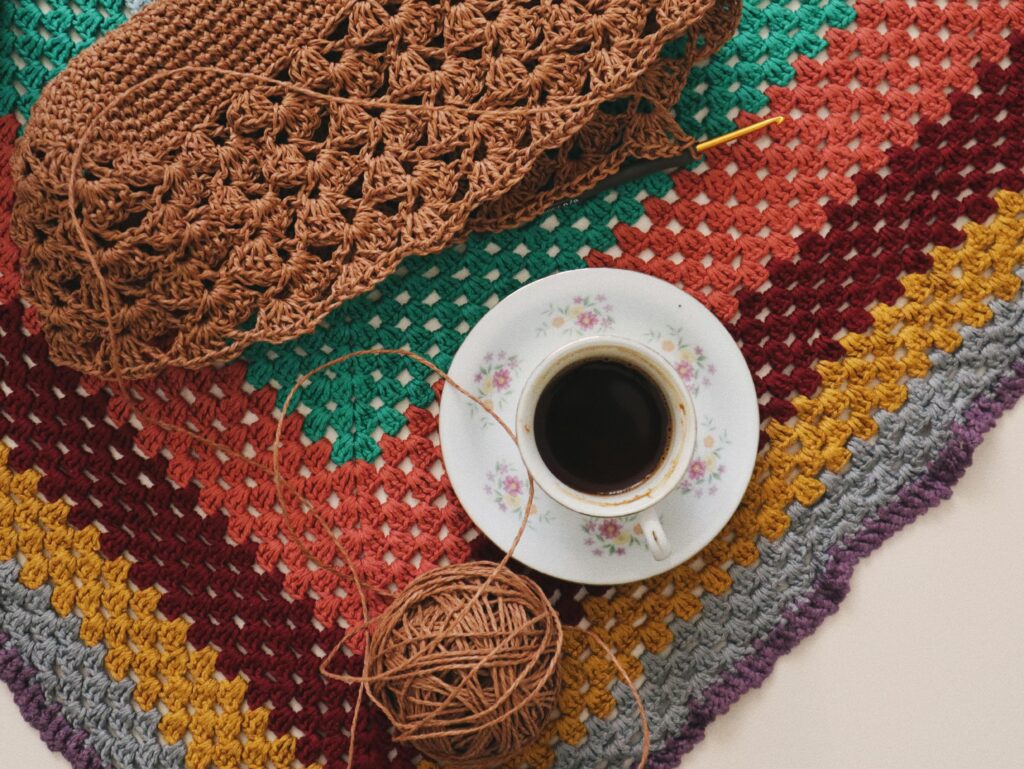
The Case for Crochet: What the Research Says About Creativity and Mental Health
Reading time: 7 minutes | Filed under: Crochet for Mental Health, Mom Self-Care, Research
Seven studies, nearly 100,000 people, 16 countries — here’s the real evidence behind crochet’s mental health benefits, and why just 10 minutes a day is enough to start seeing results.
Is a Hobby Really Worth Your Time?
I know for me the answer is a resounding yes, but, I get it. It’s a big ask. Making time for a hobby requires something you’re already short on — time, energy, and the mental bandwidth to plan one more thing into a schedule that already doesn’t fit.
So before we talk about crochet specifically, let’s answer the foundational question honestly: is the investment actually worth it?
After reviewing research spanning 7 studies across 16 countries — covering nearly 100,000 people — the answer is an unambiguous yes. Not “probably.” Not “it depends.” A resounding, evidence-backed yes. And the shift you’ll feel isn’t a long-term payoff. Research shows it can happen the same day you start.
Here’s what the evidence actually shows.
What Does the Research Say About Hobbies and Mental Health?
Hobbies are strongly linked to lower depression, better mood, and higher life satisfaction — based on a 2023 landmark study of 93,000 adults. In 2023, researchers published findings in Nature Medicine analyzing data from adults across 16 countries. The results were remarkably consistent regardless of culture or background: people who engaged in hobbies reported fewer depressive symptoms, better self-reported health, greater happiness, and higher life satisfaction — even among those managing chronic health conditions. [2]
An earlier study in Psychosomatic Medicine reinforced this picture. Greater participation in enjoyable leisure activities was associated with lower stress, better perceived health, and improved physiological functioning. Researchers concluded that enjoyable hobbies produce measurable psychological and physical health benefits — not as a side effect, but as a direct outcome. [1]
The bottom line: hobbies are not a luxury. They are a health intervention.
And a 2022 study in Health Science Reports added an important dimension: leisure activities don’t just improve how you feel over time. They immediately improve subjective wellbeing through positive emotional experiences — and they actively build resilience and coping capacity as a long-term benefit. [3]
Why Not Just Watch TV? (A Fair Question)
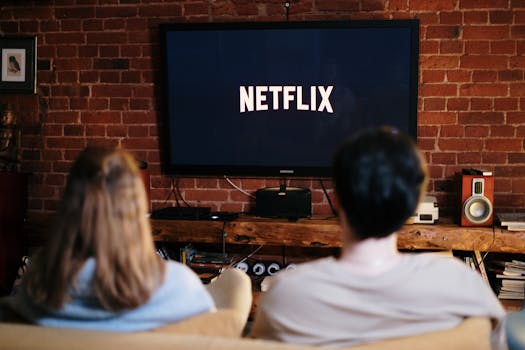
Passive screen time and active creative hobbies produce measurably different mental health outcomes — and the gap is significant, not subtle. Studies consistently show that passive activities like scrolling and television watching produce significantly worse mental health outcomes compared to active creative hobbies. [1]
The key insight: the energy you put into a hobby is exactly what creates the return. The mild focus, the gentle activation of your attention — that’s the mechanism. Passive consumption doesn’t generate the positive emotions, stress reduction, or increased resilience that active creative engagement does.
Rest that restores is different from rest that just passes time. Crochet is the former. Scrolling is usually the latter.
And here’s what matters most if you’re genuinely, deeply exhausted: you don’t need energy to spare. You need the right kind of engagement — active enough to shift your mental state, contained enough to fit inside ten real minutes.
[Want to know more about building a 10-minute habit? Check out: Why 10-Minute Habits Stick (and How Crochet Became Mine)]
Why Is Crochet Specifically Good for Mental Health?
Crochet reduces stress and anxiety, creates a mindfulness-like state, and produces a sense of tangible achievement — benefits documented across the largest dedicated study on crochet and wellbeing ever conducted. That study, published in Perspectives in Public Health, surveyed crocheters internationally and found that crochet reduced stress and anxiety, increased calmness, improved mood, and gave respondents a meaningful sense of accomplishment. Many participants actively used crochet to help manage anxiety, depression, and chronic stress. (Burns & Van Der Meer, 2021) [“Happy Hookers crochet wellbeing study”]
A 2024 scoping review in Issues in Mental Health Nursing examined crochet, knitting, embroidery, and related fiber arts — textile crafts that involve working with thread, yarn, or fabric using needles or hooks — across multiple studies. Researchers found overwhelmingly positive effects on emotional wellbeing, stress reduction, self-esteem, and coping capacity. Critically, the repetitive nature of textile crafts was specifically linked to mindfulness-like states, relaxation, and emotional comfort — effects other hobbies don’t reliably produce. (Le Lagadec et al., 2024)
The repetitive looping motion of crochet activates the parasympathetic nervous system — the body’s “rest and digest” response — which is the neurological opposite of the fight-or-flight state most of us are running on by 3pm. It’s not just that crochet is calming. It’s that the mechanics of crochet are neurologically distinct from other forms of rest.
Does Crochet Skill Level Affect the Mental Health Benefits?
No — the mental health benefits of crochet are not tied to skill level. You can be making your very first chain stitch and still experience the stress reduction, mood improvement, and sense of achievement that the research documents.
This is one of the most important findings for anyone who’s hesitated to start because they’re a beginner. The research doesn’t reward expertise. It rewards showing up. (Burns & Van Der Meer, 2021)
You can make a lumpy dishcloth. You can drop stitches. You can be a complete beginner and still be someone who crochets — and still access everything the research promises.
Crochet vs. Other Creative Hobbies: What Makes It Different?
Crochet’s unique advantage is that it’s genuinely interruptible. Unlike reading, painting, or baking, you can put it down mid-row when someone yells “mom” — which they will — and pick it right back up without losing your place or your progress.
This isn’t a small practical detail. It’s the difference between a hobby that works in your actual life and one that stays permanently aspirational.
Research on craft-based activities also consistently links the sense of tangible output — a row of stitches at the end of ten minutes that wasn’t there before — to increased self-esteem and a stronger sense of personal agency. Both are quietly eroded by the invisible nature of caregiving work. (Kenning, 2015)
| Feature | Crochet | Reading | Painting | Baking |
|---|---|---|---|---|
| Interruptible mid-session | ✅ Yes | ❌ Loses flow | ❌ Wet canvas | ❌ Active heat |
| Portable | ✅ Yes | ✅ Yes | ❌ Usually not | ❌ No |
| Produces tangible output | ✅ Yes | ❌ No | ✅ Yes | ✅ Yes |
| Repetitive/meditative motion | ✅ Yes | ❌ No | Partial | ❌ No |
| Low cost to start (~$15) | ✅ Yes | Varies | ❌ Higher | Varies |
| Works in 10-minute windows | ✅ Yes | Partial | ❌ No | ❌ No |
The Time, Money, and Energy Objection (Answered Honestly)
Time: Ten minutes of crochet is not ten minutes taken from your family. It’s ten minutes that makes you more emotionally present and less depleted for the other 23 hours and 50 minutes. The research on immediate mood improvement from leisure activity is directly relevant — this isn’t a long-term payoff. The shift is measurable the same day. (Takiguchi et al., 2022)
Money: The barrier to entry is genuinely low. A crochet hook costs $3–$8. A skein of yarn costs $5–$10. That’s roughly $15 total — a one-time investment to access a daily practice with documented mental health benefits. For context: one therapy session typically runs $100–$200. One yoga class, $20–$35. One wellness app subscription, $10–$20 per month.
Energy: The mild engagement required is the mechanism, not the obstacle. And micro-habits — small, consistent actions of 5–15 minutes — are specifically supported by habit formation research as more effective than large, occasional efforts for both habit formation and long-term mental health benefit. Ten minutes is not a compromise. It is exactly the right amount.
[The psychology behind habit tracking and why small wins work.]
FAQs: Crochet and Mental Health
Q: Can crochet really help with anxiety and depression?
A: Yes, based on multiple studies. The largest dedicated study on crochet and wellbeing found that the majority of respondents reported reduced anxiety and improved mood, with many actively using crochet as a tool to manage anxiety, depression, and chronic stress. (Burns & Van Der Meer, Perspectives in Public Health, 2021)
Q: Do I need to be good at crochet to get the mental health benefits?
A: No. The mental health benefits documented in research — reduced anxiety, improved mood, increased resilience — are not contingent on skill level. Beginners experience the same neurological calming effects from the repetitive motion as experienced crocheters. You just need to start.
Q: How long do I need to crochet each day to see a benefit?
A: Research supports micro-habits of as little as 5–15 minutes for measurable mood improvement. Studies on leisure activities show that even brief engagement can produce immediate positive emotional effects. Consistency matters more than duration.
Q: Is crochet better for mental health than watching TV or scrolling?
A: Yes, based on the evidence. Studies consistently show that active creative hobbies produce significantly better mental health outcomes than passive screen-based leisure, including lower stress, better mood, and stronger resilience over time. (Pressman et al., Psychosomatic Medicine, 2009)
Q: What makes crochet different from other creative hobbies for mental health?
A: Crochet’s repetitive motion specifically activates the parasympathetic nervous system — the body’s relaxation response — in a way that most other hobbies don’t. It also produces tangible output, is genuinely interruptible, and requires no skill to access its core benefits, making it unusually accessible for busy or exhausted people.
The Bottom Line
Seven studies. Sixteen countries. Nearly 100,000 people. The evidence is consistent: hobbies matter for mental health, creative hobbies matter more than passive ones, and crochet specifically carries documented benefits that go beyond what most leisure activities can claim.
You’re not considering this because it’s a cute trend. You’re considering it because the version of yourself who makes things — who has something that’s entirely, completely hers — is a healthier, more resilient, more whole person.
The research agrees with you. And ten minutes is enough to start.
Ready to build your first crochet habit?
Take the Creative Momentum Quiz and see how you can make crochet part of your lfe.
Last updated: June 2026
Citations
- Pressman, S. D., Matthews, K. A., Cohen, S., et al. (2009). Association of Enjoyable Leisure Activities With Psychological and Physical Well-Being. Psychosomatic Medicine, 71(7), 725–732. DOI: 10.1097/PSY.0b013e3181ad7978
- Mak, H. W., Noguchi, T., Bone, J. K., et al. (2023). Hobby engagement and mental wellbeing among people aged 65 years and older in 16 countries. Nature Medicine, 29, 2233–2240. DOI: https://doi.org/10.1038/s41591-023-02506-1
- Takiguchi Y, Matsui M, Kikutani M, Ebina K. The relationship between leisure activities and mental health: The impact of resilience and COVID-19. Appl Psychol Health Well Being. 2023 Feb;15(1):133-151. DOI: 10.1111/aphw.12394
Epub 2022 Aug 15. PMID: 35971651; PMCID: PMC9538683. - Burns, P., & Van Der Meer, R. (2021). Happy Hookers: Findings from an international study exploring the effects of crochet on wellbeing. Perspectives in Public Health, 141(3), 149–157. DOI: https://doi.org/10.1177/1757913920911961
- Le Lagadec, D., et al. (2024). Healing Stitches: A Scoping Review on the Impact of Needlecraft on Mental Health and Well-Being. Issues in Mental Health Nursing. DOI: 10.1080/01612840.2024.2364228
- Kenning, G. (2015). “Fiddling with threads”: Craft-based textile activities and positive well-being. Textile, 13(1), 50–65. https://doi.org/10.2752/175183515X14235680035304
- Lagunes-Córdoba, E., et al. (2022). A better way of life: The role of leisure activities on self-perceived health, perceived stress, confidence in stress management, and social support. Frontiers in Psychiatry, 13. DOI: https://doi.org/10.3389/fpsyt.2022.1052275
Pingback: The Why Behind Monthly Challenges - My Daily Stitch
Pingback: Why Community Matters - My Daily Stitch
Pingback: Why Busy Moms Deserve a 10-Minute Crochet Habit (And How to Actually Build One) - My Daily Stitch
Pingback: Elementor #1753 - My Daily Stitch
Pingback: Monkey See, Monkey Do: How Your Hobby Teaches Your Kids - My Daily Stitch